December 2025 was a month of celebration as libraries across the city honored young readers who achieved incredible milestones in the 1000 Stories Before School (1000 SBS) reading campaign.
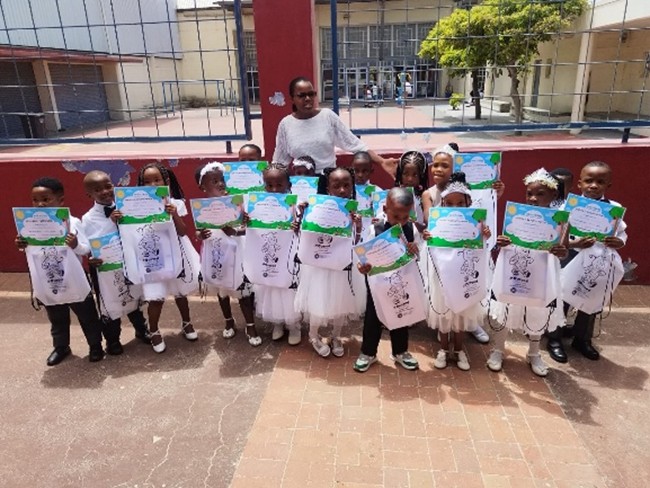
On 4 December 2025, fourteen children from the Little Monkeys Daycare were recognized for reaching the 250-reading milestone. The celebration began with an engaging story session that captured the children’s imaginations, followed by a lively cupcake-decorating activity. LiBee, our beloved library mascot, made a special appearance and joined Assistant Librarian Luca Japhta in handing out goodie bags and certificates to the proud readers.
Luca Japhta with the Little Monkeys Class of 2025
Southfield Library
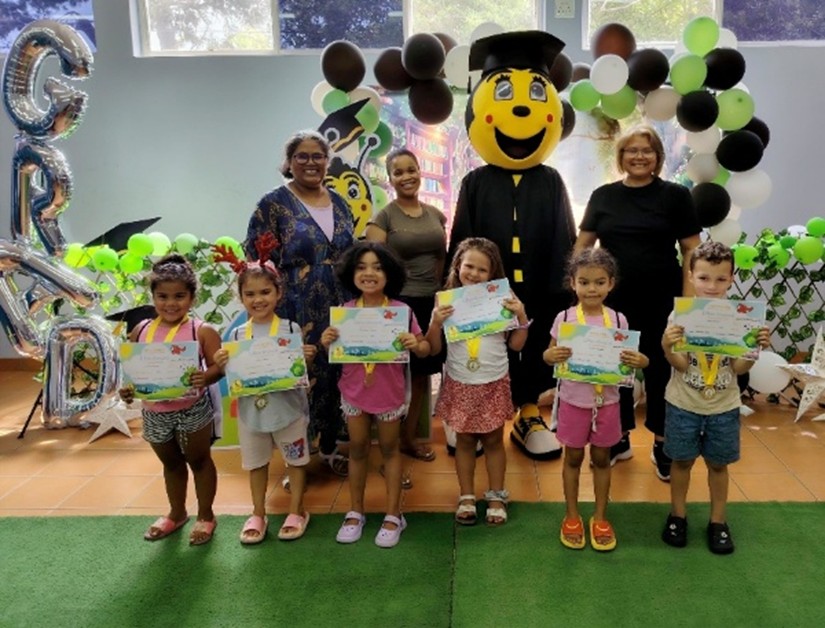
Just a few days later, on 9 December 2025, Southfield Library hosted another joyful 1000SBS event. Librarian Charmaine Fritz transformed the Southfield Library Hall into a magical space in honour of the children who received their reading incentives. Nine children from Little Blossoms ECD were celebrated for completing the 1000-reading milestone, while Lymphleigh Educare proudly achieved the 250-reading milestone.
Charmaine Fritz with the teachers and children from Little Blossoms Class of 2025.
Brackenfell Library
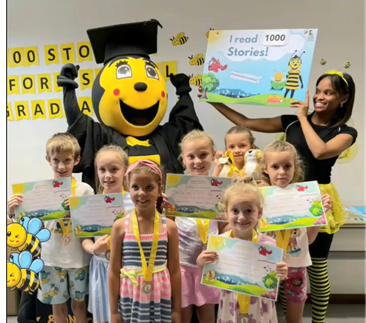
On 11 December 2025, Brackenfell Library hosted a vibrant celebration for the 1000 Stories Before School campaign, led by champion Lee Anne Davids. The event brought together proud parents and grandparents to honour the milestones of 114 young readers, including nine patrons and 26 children from local ECD centers who reached the impressive 1000-story mark.
Families shared heartening stories of how the programme has turned reading into a shared household activity and significantly boosted children’s confidence and engagement. Building on the momentum of previous years, the Brackenfell team continues to serve as a brilliant example of teamwork and dedication, proving that every story shared helps cultivate a new generation of curious, lifelong learners.
LiBee and Lee Ann Davids with young patrons who received their 1000 Reading Milestone incentives
Milnerton Library
The celebrations continued the following day at Milnerton Library, where a vibrant and joyful 1000 Stories Before School event kicked off with a lively dance performance by Librarian, Thembela Dike and our beloved mascot, LiBee. The spotlight shone brightly on fourteen young achievers, including two remarkable readers who reached the prestigious 1000-story milestone through their dedicated love for books.
To mark the occasion, guests enjoyed a spread of hot dogs and Polar Ice Cream treats while each child received a special goodie bag filled with party surprises and promotional items. It was a day defined by laughter and community pride, further cementing Milnerton Library’s role in championing the joy of reading and nurturing the next generation of confident, lifelong learners.
Milnerton Library patron receiving their 250-story incentive.
Nazeema Isaacs Library
The momentum of the campaign reached Simunye and Khusela Educare in December, where 1000 Stories Before School Champion Xolelwa Sikrenya celebrated sixty enthusiastic young readers for achieving their 250-story milestone. Xolelwa’s infectious energy and passion for literacy filled the classrooms with joy as children proudly received their certificates and incentives, marking a significant step in their early reading journeys.
Teachers and caregivers expressed their delight, noting how the programme has successfully sparked a genuine love for books and established a positive reading culture within their learning environments. These heartwarming celebrations serve as a powerful reminder that every milestone matters in building the strong foundations necessary for a lifetime of learning.
The Nazeema Isaacs team celebrating the children at Simuneye and Khusela Educare
Durbanville Library
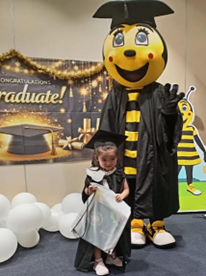
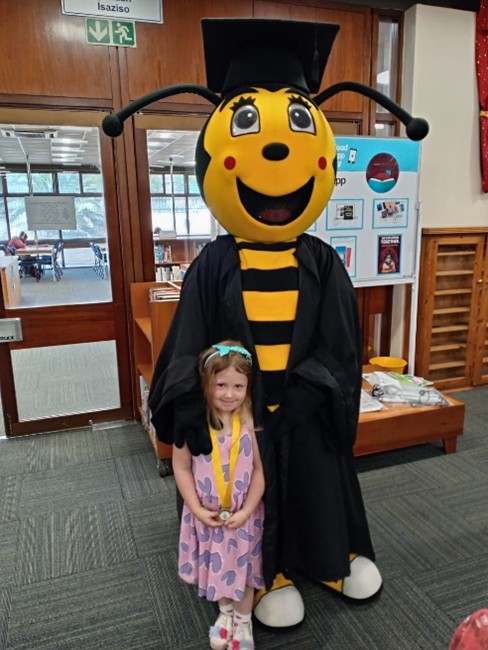
The celebrations culminated in Area East on 15 December 2025 at Durbanville Library, where LiBee, proudly adorned in a graduation cap and gown, handed out certificates to three dedicated young patrons. Among the honorees was Amelia (Milli) Kruger, who was celebrated for reaching the prestigious 1000-story milestone.
Amelia Kruger shows off her medal at the Durbanville Library ceremony.
These events remind us that the 1000 Stories Before School program is about so much more than just numbers; it is about nurturing the imagination, strengthening family bonds, and preparing children for success in school and beyond. Every story shared brings us closer to building a generation of confident and curious learners. A heartfelt thank you goes out to our librarians, educators and families who made these celebrations possible as we continue to create a vibrant culture of reading, one milestone at a time.
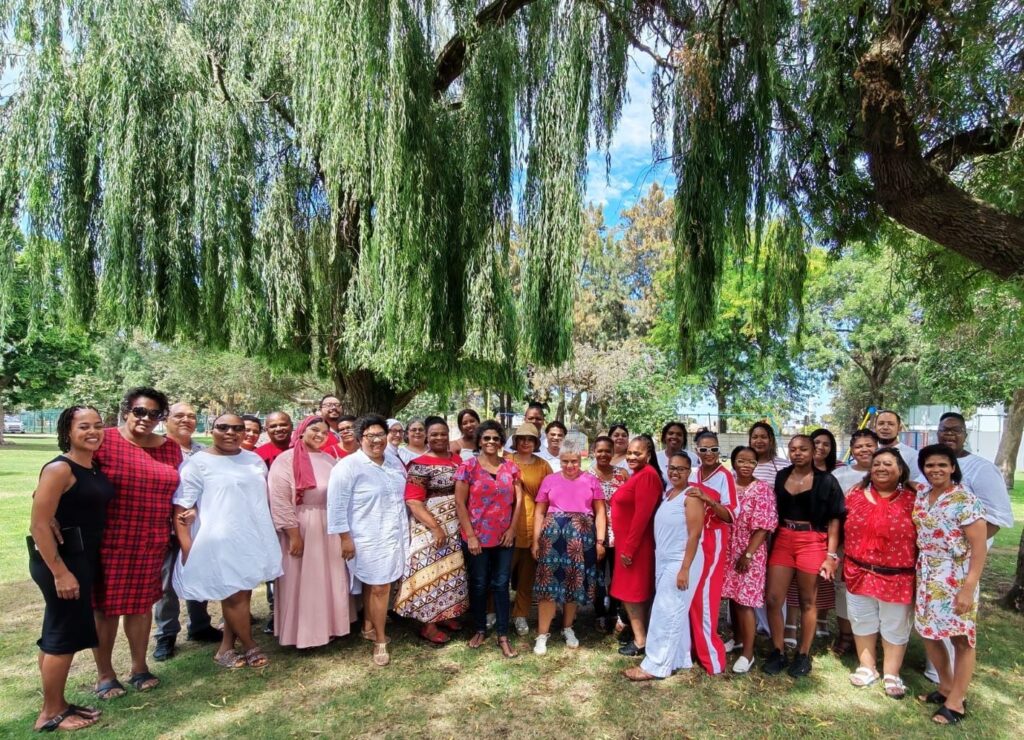
Subarea C9’s management team hosts a Day of Appreciation for Assistant Librarians in the subarea.
While February is traditionally the month of love, Subarea C9 redefined “appreciation” this year by hosting a spectacular surprise tribute for 24 dedicated Assistant Librarians on 12 February 2026. What was initially presented as a standard workshop at the Kuilsriver Caravan Park, was revealed to be a “shock and awe” transformation into a VIP lounge, where staff were greeted by a venue decked out to the nines in their honor.
In a moving display of recognition, the walls featured photos of every Assistant Librarian in attendance, alongside personal notes from their Librarians-in-Charge highlighting their unique contributions. Subarea Head Thandiwe Mtshengu set a powerful tone for the day, emphasizing that the event was a dedicated space to celebrate the commitment and hard work that keeps our libraries thriving. After Thandiwe’s beautiful start to the day, guests were treated to a line-up of special guest speakers.
Emily Afrikaner, LIC of Delft Library, shared her remarkable journey of resilience, from crossing rivers to reach school to balancing motherhood and work while studying. Her story of perseverance was beautifully complemented by Ashleigh Wessels, who spoke about her community-focused initiatives at Southfield Library, leaving the room inspired to deepen their impact in the areas they serve. To close the day, newly retired library legend Clara Bothma shared wisdom from her 33-year career at Ravensmead Library, offering a poignant reminder that exceptional service begins with our most powerful tool: the simple act of listening.
August 2025 witnessed the introduction of the City of Cape Town (CCT) Learning and Development Policy (L&D), which replaced the 2021 Education, Training and Development (ETD) Framework. Due to certain challenging clauses in the L&D, it was put through a light review in November 2025 and thereafter finalised in December 2025. The L&D governs ETD in the City of Cape Town and this article will look at the most significant changes introduced by the L&D and how this may impact staff.
ETD VS L&D – WHY THE NAME CHANGE?
While the L&D does not explain the reason for the name change, in the global context, organisational Education and Training has not always been all encompassing. Education and Training was often viewed as intervention or skill specific e.g. a SAP Business Intelligence workshop targets training in SAP Business Intelligence or a degree in Library and Information Science targets education in Library and Information Science. Learning and Development is meant to be all encompassing and continuous, what we have often referred to as lifelong learning. It is meant to include everything from induction and onboarding to development of the employee using various platforms and tools, not only structured education and training courses.
As a Library and Information Services ETD section, despite our limited staff component we have always striven to address the development aspect of ETD. Development interventions we offered over the years included the following:
Developing LISC In-house Training Interventions and Material
Induction and Onboarding Manuals and Workshops (returning to ETD in 2026-2027)
Morning Coffee Conversations
Job Shadowing facilitation
EPWP Projects for Library & Information Science students
Work Readiness Workshops for EPWP students
Fieldwork, Vacation work and Work-Integrated Learning placement for LISC students
Mentoring Workshops for External and Internal Bursar Mentors
Career Preparation Workshops for External Bursars
IPM Workshops for staff and the Broader Management Team
Overseeing Research in LIS
Articles in the LIStener
Contributions to the CCT Career Guide
We often get training requests from staff and unfortunately it is challenging for the ETD section to do more with its current staff component. Our responsibilities have expanded considerably over the past decade and while staff development remains a vital component, the Workplace Skills Plan and related compliance tasks remains the chief focus of the unit.
EMPLOYEE INTERNAL FINANCIAL SUPPORT (BURSARIES)
For more than a decade, internal bursars would continue receiving financial support for the duration of their qualification, subject to passing at least 50% of modules registered in a given academic year. The L&D effectively requires 100% pass or proof of re-registration of failed modules for financial support to continue as per the policy:
10.1.6. The City shall not pay for any failed subject(s), modules(s) or research studies. Employees shall be liable for the re-registration and any other cost of the failed subject(s), module (s) or research studies.
10.1.7. Financial support for continuation will only be approved upon submission of proof of:
10.1.7.1. Successful completion of previously registered subject(s), module(s), or research studies; and
10.1.7.2. Re-registration of previously failed subject(s), module(s), or research studies. This clause should be read in conjunction with clause 10.1.6.
SEMINARS, WORKSHOPS, CONFERENCES, WEBINARS AND L&D MEETINGS
The System and Procedure for the attendance of Seminars, External Meetings / Workshops and Conferences was incorporated almost verbatim into the L&D.This resulted in the L&D referring to the Cost Containment Policy in relation to L&D interventions, which was not the case with the ETD Framework:
10.7.2 Any L&D interventions must be implemented in alignment with National Treasury regulations and the City’s Cost Containment Policy.
LEARNING AND DEVELOPMENT LEAVE ALLOCATION
The L&D introduced new leave categories and expanded the definition of Exam and Study leave as per the following:
Exam and Study Leave
While the ETD Framework allowed one day’s study leave and one day’s exam leave per subject or module, the L&D POLICY expands this to dissertations and theses:
10.8b Employees, excluding shift workers, shall be granted one day’s leave for study and one day’s leave for exam per subject or module or one days leave for the preparation for dissertation or thesis and one days leave for defending a dissertation or thesis.
New Leave Categories for CPD and Attendance of L&D-Related Meetings
The L&D introduced new L&D leave categories with a few of this leave types now loaded on SAP however not available on the drop-down list. This is due to the fact that permission must be obtained from the delegated authority to access this leave. LIS ETD is engaging Corporate ETD regarding accessing the above leave types via LSO and will communicate outcomes as soon issues are clarified.
k. Employees shall be granted 10 days leave for the purpose of attending in person workshops per financial year.
l. Employees shall be granted 10 days leave for the purpose of attending Continuous Professional Development per financial year.
m. Employees shall be granted 10 days leave for the purpose of attending webinars per financial year.
n. Employees shall be granted 10 days leave for the purpose of attending thesis based classes or study tours per financial year.
o. Employees shall be granted 5 days leave for the purpose of attending L&D related meetings or as representatives on professional institutes or organisations recognised by Local Government per financial year. A formal invitation from the institution, organisation or professional body is required to support this leave allocation.
p. Employees are required to submit an official letter from institution and timetable prior to approval of leave by the delegated authority.
Sabbatical Leave
The L&D covers sabbatical leave outlining how it may be accessed:
10.8.2. Employees shall be granted a maximum of up to 12 months for sabbatical leave. This attendance will be regarded as special leave and only the City Manager may approve sabbatical leave.
a. Sabbatical Leave for City Staff is solely granted for academic or study research and accompanied by a compelling business case subject to approval by the delegated authority.
b. Sabbatical leave is an unpaid leave for the purposes of researching topics of interest or relevance to the employee’s career, studies or training to advance or change career in line with City related needs.
c. The City may approve unpaid sabbatical leave subject to operational requirements and the employee agreeing to fully fund all benefits such as (Pension Fund, Medical Aid, Group Life, etc.).
d. The employee may receive an external stipend from any organisation other than the City during the period of sabbatical leave.
e. Applications for sabbatical leave that are deemed to be for personal gain, where the activity serves private, or non-academic interests, will not be approved.
f. Sabbatical leave does not constitute a break in the period of continuous service.
g. Sabbatical leave applies to all employees with at least 24 months continuous service.
h. In instances where an employee does not comply with the conditions of the sabbatical leave contract the employee will be required to –
I. work back the period equivalent to the sabbatical leave taken up to a period of 12 months; or
II. to payback a pro-rated amount for the duration of the sabbatical leave.
Increased Leave Periods for L&D Programmes
The L&D has extended periods for some programmes. The new duration is indicated below:
11.3. Learning Programmes Offered By The City
11.3.1. Graduate Internship Programme from 6 up to 36 months;
11.3.2. Graduate Trainee Programme from 6 up to 36 months;
11.3.3. Work Integrated Learning, from 1 up to 36 months;
11.3.4. Learnerships from 12 up to 36 months;
11.3.5. Apprenticeships from 1 up to 36 months;
11.3.6. Vacation Programme, from 1 up to 2 months;
11.3.7. Job shadowing Programme from 1 day up to 1 month;
11.3.8. Skills Programme, from 1 up to 36 months;
11.3.9. Field workers from 1 up to 3 months; and
11.3.10. Project Based Learning Programme from 1 up to 36 months.
CONCLUSION
The L&D The Learning and Development team is currently refining our Standard Operating Procedures (SOPs) to provide clearer guidance for everyone. While no new SOPs have been issued since December 2025, officials across all levels are actively navigating the current landscape, essentially building our framework through real-world application and precedent. Rest assured, LIS ETD will keep you informed of every development through our monthly meetings, The LIStener and our regular digital channels.
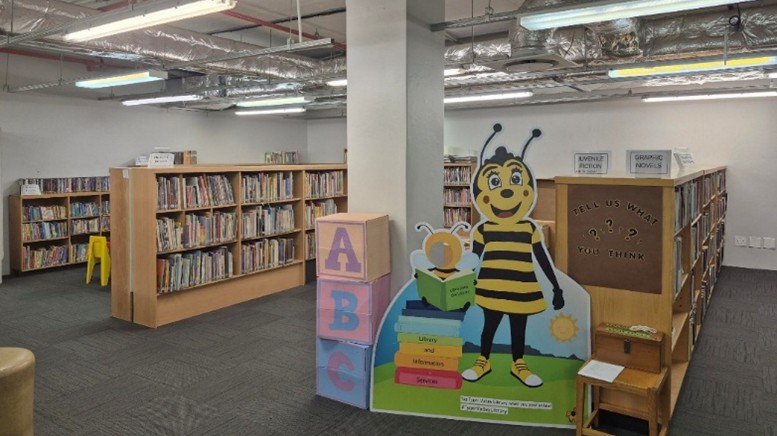
In November 2025 and February 2026, Tyger Valley Public Library closed temporarily for maintenance. During these two closure periods, the library underwent some exciting updates including new carpets being installed and a fresh coat of paint, revealing a whole new look!
Staff dedicated the time the library was closed to reviewing the layout, studying circulation statistics and inspecting the condition of items on the shelves. Books that were not circulating were removed to make space for new acquisitions and bookshelves were moved around to complete the new look. The layout changes completely opened the space and now allows staff to host more children’s storytelling programs and events.
Tyger Valley Public Library Children’s Section
During the closure, staff continued to assist patrons at the front door with book returns and offered a small selection of books to choose from for the desperate reader. The library officially reopened to the public on Monday, 23 February 2026 and staff look forward to showing patrons around the new and improved space while spreading the love of reading.
“Did you know? Tyger Valley Public Library has been in Tyger Valley Shopping Centre since 1988!”
Walk into any library today and you’ll probably spot two kinds of readers: one flipping through a paperback, the other scrolling through an eBook on a phone. And the best part? Both are completely at home in the same space. Libraries have grown into places where traditional books and digital reading sit side by side. Not competing but complementing each other in ways that serve every type of reader. It is no longer a case of “either/or”, but rather “why not both?”.
There is something undeniably special and timeless about the physical book – the familiar weight in your hands, the tactile feel of the pages and the serendipitous joy of discovering a new favorite while browsing the shelves. These are the grounding experiences that make a library feel like a library, forming a core part of the reading identity for so many of our patrons. Children learning to read often benefit from the tactile nature of print books. Older patrons frequently prefer the clarity of physical text. And let’s be honest: some stories simply feel better in print.
At the same time, digital platforms like Libby have opened exciting new doors, becoming a firm favorite for many of our patrons. The beauty of digital borrowing lies in its effortless flexibility; whether it’s checking out a title at 10pm, listening to an audiobook while cooking, or simply bumping up the font size to save a hunt for reading glasses. Digital borrowing offers speed, privacy, and flexibility. Perfect for busy adults, students, and readers on the move. And trust me, these small conveniences make a big difference.
However, many patrons happily enjoy mixing formats: reading the print version at home, and the eBook on the train, or borrowing the audiobook after realising the physical copy might not fit into a full handbag. The strength of a modern library certainly comes from offering choices. Some days call for the comfort of a physical book and a quiet corner while others call for a phone, headphones and an audiobook that keeps you company in traffic. Together, they expand the library’s reach far beyond what one format could do alone.
By offering both paper and digital formats, libraries meet patrons exactly where they are and this blend of tradition and technology ensures the library remains relevant, welcoming and adaptable. A place that honours the past while embracing the future. Whether a reader turns a page or taps a screen, the goal remains the same: access to stories, information and ideas. And if Libby helps someone read more, without replacing the joy of physical books, then the app is doing exactly what libraries do best.
As librarians, it’s generally assumed that we read. It’s practically a part of our job descriptions, right? However, whether we actually read for pleasure often feels irrelevant. Reading is so tightly woven into our professional identity that it rarely gets questioned, named, or – ironically, protected. And yet, if we’re honest, many of us aren’t reading as much as we’d like to. Not because we don’t care, but because the work is heavy, the days are full and the “other duties as assigned” keep multiplying like overdue notices.
I still miss quiet desk shifts, the ones where you could sit with a book while keeping half an eye on the library. Those moments felt like a small miracle, in hindsight. I didn’t realise then how rare they wouldd become, not just for me, but for library staff in general. Now, working behind the scenes and reading during the workday happens mostly during lunch, if at all, and often feels like something I’m sneaking in rather than something that belongs there.
Libraries are changing fast with social media reshaping reading culture at a rapid speed. BookTok now drives demand overnight. Readers arrive with screenshots, titles and very specific expectations. This is a good thing as it means people are excited about books. We love that for them (and us). At the same time, many library staff are exhausted. We’re stretched thin, juggling engagement, visibility, targets, access and gate counts. All of this matters but somewhere in this constant motion reading quietly slips down the priority list – something we’ll return to when things calm down. Spoiler alert: they don’t.
What’s become clearer to me is that reading is one of the simplest ways to care for our professional health. It steadies us. It sharpens our thinking. It gives us language, context and perspective. It helps us zoom out when we’ve been stuck in the weeds of daily tasks. We need to remind ourselves that reading doesn’t have to be ambitious or impressive. It can be a chapter, an article or simply a report read properly instead of skimmed. Professional reading counts, people.
We teach information literacy. We promote lifelong learning. But we don’t always apply those same principles to ourselves. And while reading alone doesn’t make someone a better librarian, not reading can quietly erode confidence, clarity and our ability to engage meaningfully with change. What I hope for is a shift in the perception of reading. Reading not as a hobby we squeeze in, but as a quiet, sustaining practice. One that helps us think beyond urgency and helps us return to our work with more curiosity, patience and depth.
We don’t need to read everything or keep up with every trend. We just need to keep reading in ways that feel sustainable and meaningful. In ways that nourishes our thinking and quietly supports our practice. Because steady, intentional reading keeps us connected to our work, our values and the responsibility we carry as stewards of knowledge.
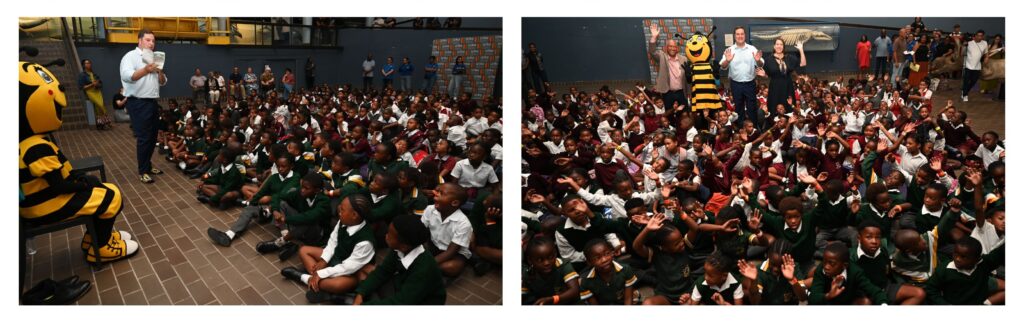
World Read Aloud Day (WRAD) 2026 was nothing short of magical. Across Cape Town’s public libraries, the day was not only celebrated with enthusiasm, but the heart of the celebration pulsed at the Iziko Museum, where laughter, curiosity and wide‑eyed wonder filled every corner. The museum came alive as children explored ancient worlds, discovered new stories, and experienced a day they will not soon forget.
This year we partnered with Nal’ibali and the Iziko Museum to support Nal’ibali’s ambitious national goal of reading aloud to 4 million children. This partnership brought together storytelling, heritage, and community and created an unforgettable celebration of reading. Our libraries reached an incredible milestone of reading aloud to 41 040 children. This achievement reflects our shared commitment to literacy, community, and joyful learning.
Learners from schools in Goodwood, Lentegeur, Gugulethu and Mfuleni joined us for the official launch at the museum. For many, it was their very first museum visit and you could see the awe on their faces as they wandered through the museum halls, whispering “wow” at fossils, butterflies and towering dinosaurs.
Then came one of the day’s most unforgettable moments. Executive Mayor Geordin Hill-Lewis took to the stage, kicked off his shoes and revealed a pair of wonderfully funky socks – much to the delight of every learner watching! What followed, was pure joy. The mayor and everyone in attendance joined LiBee, our beloved library mascot, for the lively “LiBee Jive.” Soon the entire room was buzzing as participants fluttered their wings, wiggled, jiggled and danced along with big smiles.
The feedback received from teachers at the event perfectly captures how special the day was:
“It was an unforgettable day at the Iziko Museum… our learners were absolutely inspired.” — Mrs Mc Bride
“It was a day of ‘firsts’ for our learners… The mayor was singing, reading and dancing with our learners. The kids were happy.” — Ms Frans
“The experience sparked curiosity… We are so grateful for the impact it has had on our learners.” — Mrs Govender
WRAD 2026 showcased library staff’s immense passion, led by Town Centre’s record-breaking outreach to 2,862 children for the third consecutive year. Following closely, Kuyasa, Macassar, and Melton Rose libraries reached thousands more. These figures represent far more than data; they signify thousands of sparked imaginations and inspired young minds.
Several libraries went above and beyond this World Read Aloud Day to ensure inclusive access to stories, creating meaningful experiences for children with diverse learning needs. Valhalla Park Library made a significant impact by reading to 215 learners from St Joseph’s School for Special Needs, while Westridge Library hosted classes from Beacon LSEN for a lively day of storytelling, songs, board games, colouring and free reading.
Plumstead Library extended their celebrations by visiting two special‑needs schools and a special‑needs ECD, noting how joyfully the learners engaged with the stories. Grassy Park Library partnered with LOFOB, bringing the gift of storytelling to adults and children who are blind or visually impaired. Southfield Library also proudly included CAFDA School of Skills in their programme, ensuring older learners with support needs could enjoy the day. Together, these libraries demonstrated the heart of our service that every child, regardless of ability, deserves to experience the magic of stories.
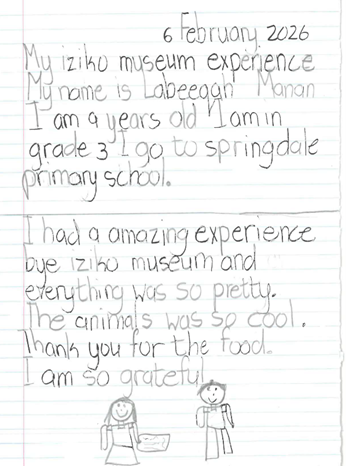
This year’s collaboration with the Iziko Museum added something truly special. The combination of books, history and creative exploration made the day both educational and unforgettable. Learners’ drawings and writings afterward spoke volumes about what the experience meant to them.
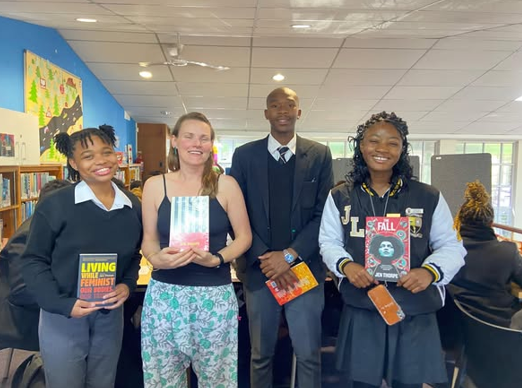
On 3 March 2026, Wynberg Library buzzed with creative energy as we hosted a dynamic writing workshop featuring acclaimed feminist writer and researcher, Jen Thorpe. With a diverse portfolio ranging from novels to children’s books, Jen brought a wealth of expertise to an inspired group of learners from Voortrekker High School. The session was a vibrant celebration of local talent, bridging the gap between established authors and the next generation of storytellers.
Throughout the interactive workshop, students explored various writing techniques and imaginative prompts designed to build their confidence. It was wonderful to see a welcoming space emerge where learners felt empowered to share their thoughts and begin crafting their own unique narratives. To add to the excitement, Jen generously gave away copies of her books as spot prizes, sparking even more enthusiasm and making the day truly unforgettable for everyone involved.
The impact of the day is already being felt, with many participants now eager to dive into their own writing projects. We are optimistic that these original pieces will eventually be compiled and published on the Libby app, providing these young writers with a digital platform to reach a wider audience. This event was a meaningful step in nurturing a lifelong love for literacy and highlights the incredible value of connecting our youth with the voices of local authors.
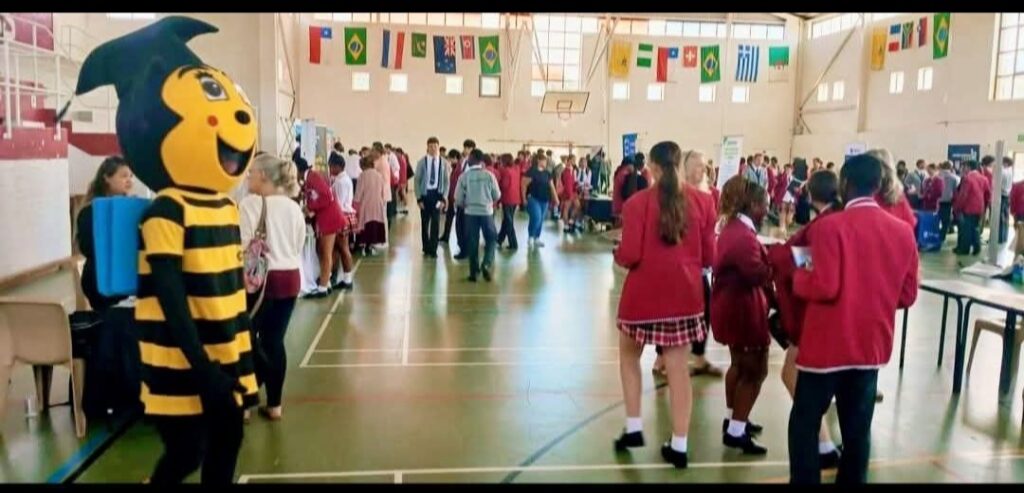
As part of their ongoing community outreach initiatives, Simon’s Town Library partnered with Fish Hoek High School to host a successful Career Expo aimed at supporting learners with post-school planning. The expo featured over 12 different institutions, offering learners a wide range of study and career opportunities. The library partnered with Absa Bank, providing learners with valuable information and tips on financial planning and funding options for furthering their studies.
Grade 9-12 learners were invited to attend and the engagement levels were encouraging. Notably, there was significant interest in libraries as a career path, with many learners enquiring about qualifications, study routes and opportunities available within the library and information services sector. The event strengthened partnerships between the library and local schools while successfully positioning the library as both an information hub and a gateway to future career possibilities.
In this edition of the newsletter, we pause to honour the lives and legacies of three remarkable members of our library family who have recently passed away. While they served in different capacities and communities, they shared a common devotion to the mission of literacy, service and the spirit of our department.
We remember with deep affection:
Shelley-Ann D. Offizi Library Aide, Collection Development Unit. Beyond her diligent work within the Collection Development Unit, Shelley-Ann was the heart and soul of the garden at our Ndabeni office. She poured extra care and attention into the soil, lovingly beautifying the outdoor space to create a sanctuary for her colleagues to enjoy. We will miss her vibrant sense of humor and her refreshing authenticity.
Ntombikayisa Lukashe Library Aide, Westridge Library. A pillar of the Westridge team, Ntombikayisa was described as one of the most energetic, kind and esteemed people to work alongside. She carried herself with an unwavering sense of dignity and grace and her presence was a true gift to both her teammates and the community she so passionately served.
Renee Cohen Librarian, Hout Bay Library. As a librarian in Hout Bay, Renee was a guide and a mentor to many. Known for her profound passion for knowledge, she had a rare ability to connect people with the stories and information they needed, often acting as a mentor to those just beginning their journey into the world of literacy.
“The library is a place where spirits live, and those who spend their lives within them leave a piece of themselves behind.”
Though they are no longer with us, their contributions continue to live on through the stories told and the lives touched across our department. Our thoughts and deepest sympathies remain with their families, friends and the teams at Westridge, Hout Bay, and the Ndabeni Office.