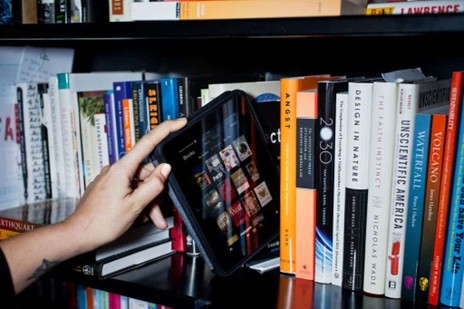
Walk into any library today and you’ll probably spot two kinds of readers: one flipping through a paperback, the other scrolling through an eBook on a phone. And the best part? Both are completely at home in the same space. Libraries have grown into places where traditional books and digital reading sit side by side. Not competing but complementing each other in ways that serve every type of reader. It is no longer a case of “either/or”, but rather “why not both?”.
There is something undeniably special and timeless about the physical book – the familiar weight in your hands, the tactile feel of the pages and the serendipitous joy of discovering a new favorite while browsing the shelves. These are the grounding experiences that make a library feel like a library, forming a core part of the reading identity for so many of our patrons. Children learning to read often benefit from the tactile nature of print books. Older patrons frequently prefer the clarity of physical text. And let’s be honest: some stories simply feel better in print.
At the same time, digital platforms like Libby have opened exciting new doors, becoming a firm favorite for many of our patrons. The beauty of digital borrowing lies in its effortless flexibility; whether it’s checking out a title at 10pm, listening to an audiobook while cooking, or simply bumping up the font size to save a hunt for reading glasses. Digital borrowing offers speed, privacy, and flexibility. Perfect for busy adults, students, and readers on the move. And trust me, these small conveniences make a big difference.
However, many patrons happily enjoy mixing formats: reading the print version at home, and the eBook on the train, or borrowing the audiobook after realising the physical copy might not fit into a full handbag. The strength of a modern library certainly comes from offering choices. Some days call for the comfort of a physical book and a quiet corner while others call for a phone, headphones and an audiobook that keeps you company in traffic. Together, they expand the library’s reach far beyond what one format could do alone.
By offering both paper and digital formats, libraries meet patrons exactly where they are and this blend of tradition and technology ensures the library remains relevant, welcoming and adaptable. A place that honours the past while embracing the future. Whether a reader turns a page or taps a screen, the goal remains the same: access to stories, information and ideas. And if Libby helps someone read more, without replacing the joy of physical books, then the app is doing exactly what libraries do best.
Gianni-Qyn Brinkhuys
Assistant Professional Officer
Collection Development Unit: Acquisitions