
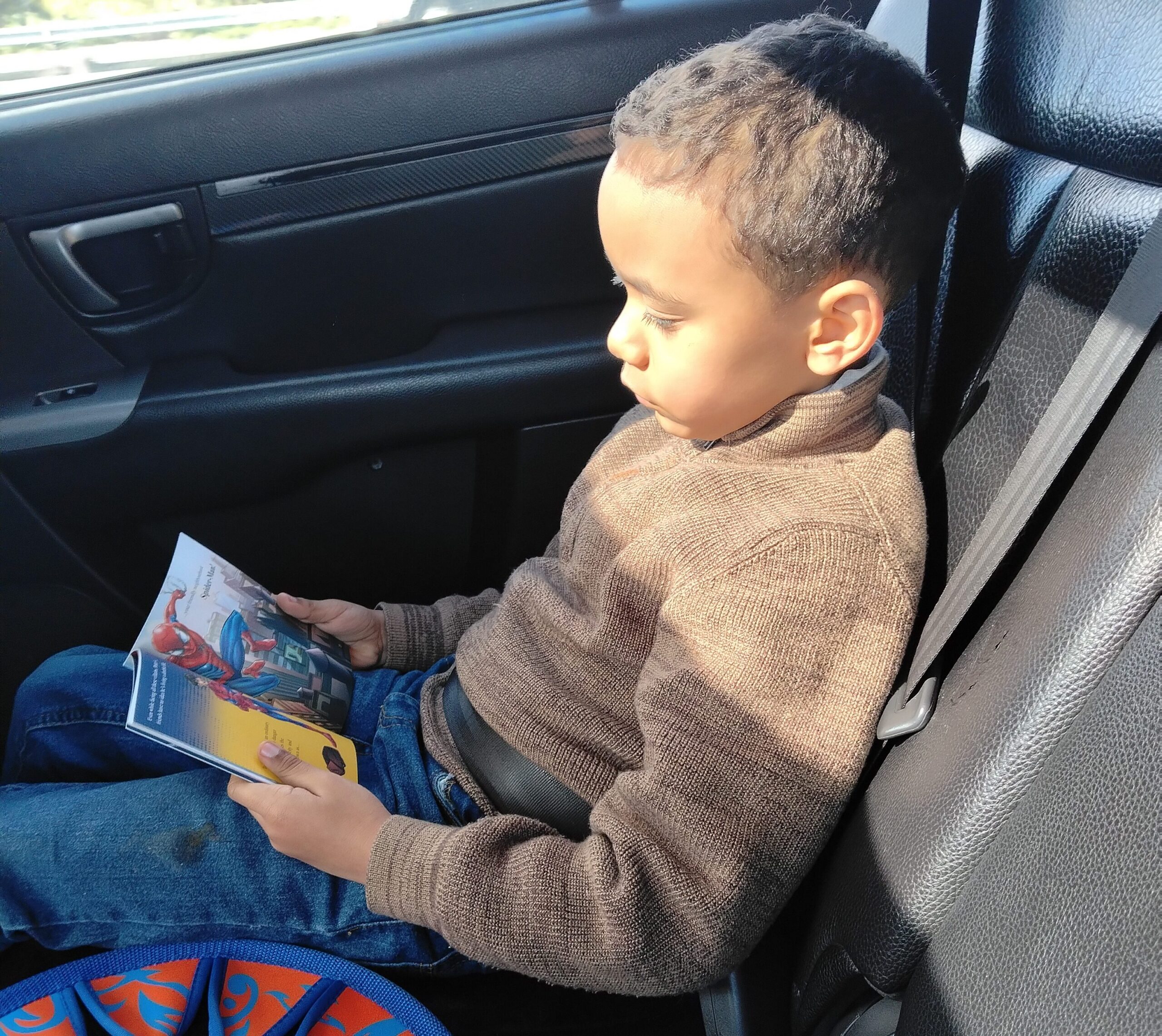
In November 2019, while working as a SmartCape Cadet for the City of Cape Town, I discovered I was expecting my child. During this time, the 1,000 Stories Before School (1000SBS) initiative was introduced. Encouraged by my Librarian-in-Charge, the late Sandra Rousseau, and my father, a former librarian at Valhalla Park Library, I enrolled in the programme deeply aware of the profound benefits it would have on my unborn baby’s developing mind. I signed up in the initiative’s early days, long before the official LiBee cards and log sheets were created, carefully tracking our progress on manual membership forms.
My journey began simply: I read stories, sang and played music through headphones to my baby bump. Even in those early stages, I could feel my little boy reacting to the cadence of the stories, the songs and the melody of my voice. When my son, Lucas, was born in June 2020, I immediately sang to him one of the lullabies he had heard in utero and I was deeply moved by his instant recognition. As he grew, I continued to immerse him in the books and music we had shared before his birth. His visible engagement and early signs of understanding were beautiful testaments to the power of the programme.
As Lucas learned to walk and talk, he began singing the very songs I had played for him, including classics like Engelbert Humperdinck’s The Last Waltz. Our story times at home quickly evolved into highly interactive sessions. He would thoughtfully question the different character voices I used, asking “Mommy, why aren’t you doing the voices?” Or he would enthusiastically point out, “Did you know this is a hedgehog?” Eventually, his confidence grew to the point where he began retelling the stories in his own unique way. Participating in this initiative undeniably broadened his imagination, enriched his creative play and advanced the way he constructed his sentences.
Today, at six years old, Lucas is a highly active and engaged student. He goes far beyond simply “sitting and listening.” He eagerly participates in discussions, asks questions and relies on hands-on methods to build an understanding of the world around him. He has developed remarkable memory retention and fact recall, alongside strong critical thinking skills and a healthy, genuine enthusiasm for school. Watching him develop such analytical and creative depth has been the ultimate reward, highlighting the lifelong value of early literacy and intentional engagement.
By Shannon Fortuin
Senior Library Assistant
Elsies River Library